

Many drivers try to lower monthly insurance costs after financing a vehicle.
One of the most common questions is:
“What happens if I remove full coverage insurance before paying off my car loan?”
At first, switching to cheaper liability-only insurance may seem like an easy way to save money.
However, for financed vehicles, removing required coverage can create serious financial problems with both your lender and your insurance protection.
Before canceling coverage, it is important to understand exactly how lenders, insurance companies, and financing agreements work together.
Quick Answer
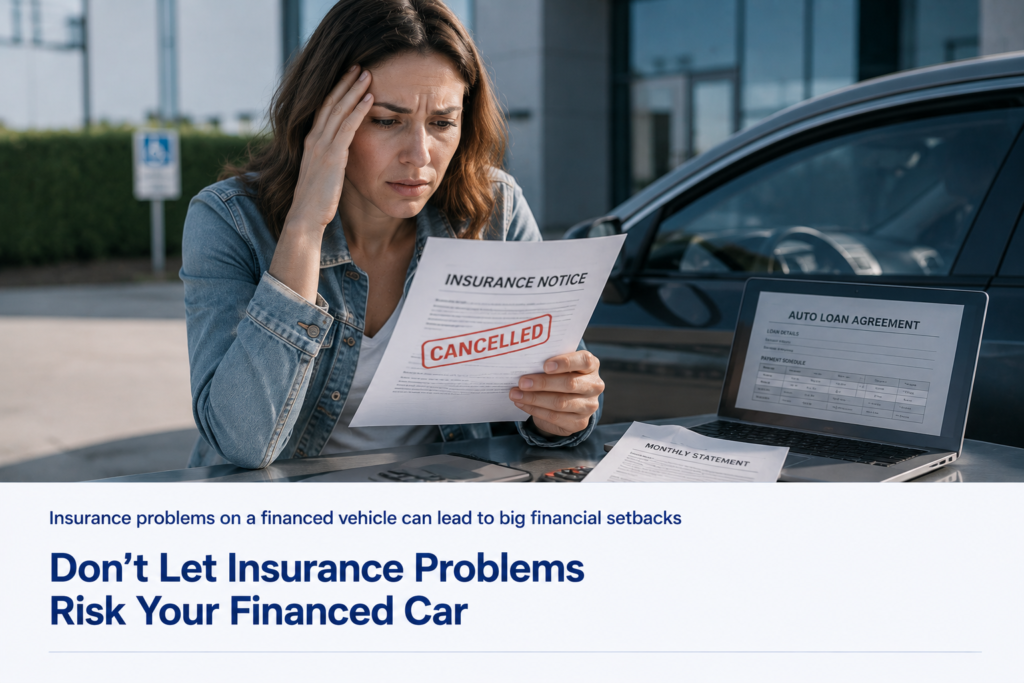
If you do not maintain full coverage insurance on a financed car, your lender may purchase force-placed insurance, increase your monthly costs, or consider you in violation of the loan agreement.
You may also face major financial losses if the vehicle is damaged, stolen, or totaled.
Why Do Lenders Require Full Coverage?
According to the Insurance Information Institute (III), lenders usually require collision and comprehensive coverage for financed vehicles because the car acts as collateral for the loan.
When you finance a vehicle, the lender still has a financial interest in the car until the loan is completely paid off.
The vehicle acts as collateral for the loan.
If the car is destroyed or heavily damaged, the lender could lose money if there is not enough insurance protection.
Because of this, most lenders require:
- collision coverage
- comprehensive coverage
- liability insurance
Together, these protections are commonly called full coverage insurance.
Learn more:
Do I Need Full Coverage If My Car Is Financed?
What Happens If You Remove Full Coverage?
Many borrowers assume the lender will never notice if they cancel collision or comprehensive coverage.
In reality, lenders often receive electronic insurance updates from insurance companies.
If your required coverage is removed, the lender may quickly respond.
Possible consequences include:
- force-placed insurance
- higher monthly payments
- lender fees
- loan agreement violations
- financial liability after accidents
- possible repossession risks in severe cases
Removing required insurance rarely saves money long term.
What Is Force-Placed Insurance?
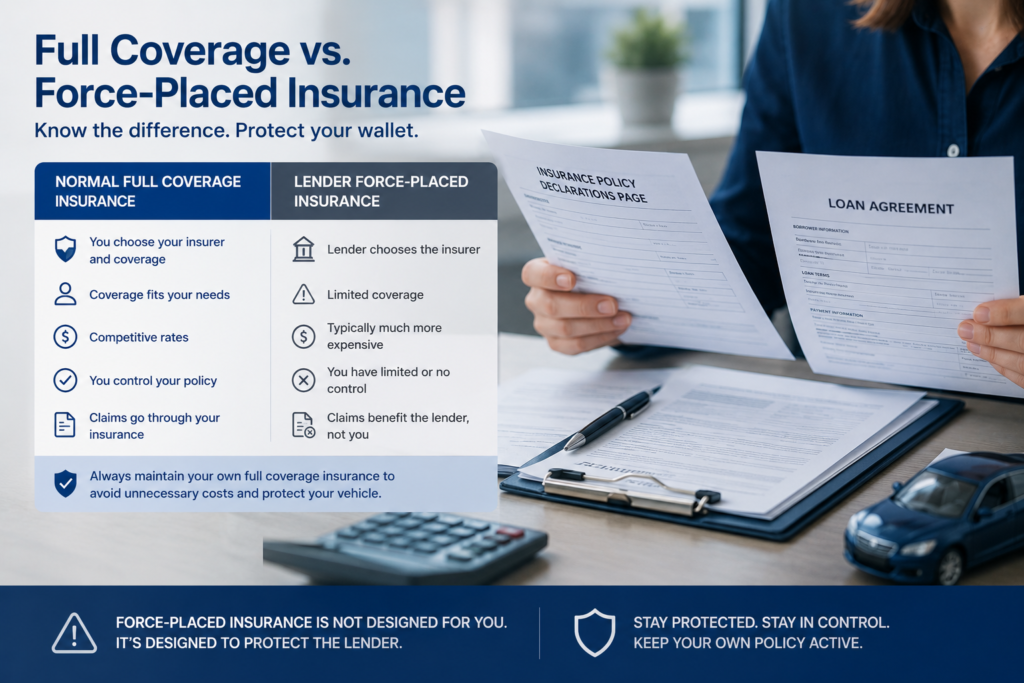
Force-placed insurance is insurance purchased by the lender after discovering the borrower no longer carries required coverage.
This type of insurance is usually:
- much more expensive
- limited in protection
- designed mainly to protect the lender
In many cases, force-placed insurance does not fully protect the borrower’s own financial interests.
Many drivers are shocked when their monthly loan costs suddenly increase after force-placed insurance is added.
Full Coverage Insurance vs Force-Placed Insurance
| Coverage Type | Who It Protects | Typical Cost |
|---|---|---|
| Full Coverage Insurance | Driver + lender | Lower |
| Force-Placed Insurance | Mostly lender | Much higher |
Force-placed insurance is usually considered one of the worst possible outcomes for financed-car owners trying to save money on insurance.
Can the Lender Add Insurance Without Permission?
In many cases, yes.
Most financing agreements clearly state that borrowers must maintain full coverage during the loan period.
If required coverage is removed, the lender often has the legal right to purchase insurance coverage on the borrower’s behalf.
When signing the loan paperwork, borrowers typically agree to these conditions.
This is why reading financing agreements carefully is extremely important.
Real Example: Removing Full Coverage Too Early
Imagine this situation:
- A driver finances a $30,000 vehicle
- They cancel collision and comprehensive coverage to lower monthly insurance costs
- Three months later, the vehicle is totaled in an accident
- Liability insurance covers damages to the other driver only
- The financed vehicle itself is not covered
The borrower may still owe thousands of dollars on a vehicle that can no longer be driven.
In addition, the lender may still demand repayment of the remaining loan balance.
This is one of the biggest risks of removing full coverage too early.
Learn more:
Can You Remove Full Coverage Before Paying Off Your Car Loan
Why Full Coverage Insurance Costs More
Many financed-car owners become frustrated because full coverage insurance costs much more than liability-only coverage.
This is because full coverage protects:
- vehicle repairs
- theft losses
- weather damage
- collision damage
- lender collateral
Learn more:
Full Coverage vs Liability Insurance
Insurance companies also consider factors such as:
- driving history
- ZIP code
- credit score
- annual mileage
- age
- vehicle repair costs
Drivers with poor credit or previous accidents often pay significantly higher premiums.
Learn more:
How Credit Score Affects Car Insurance Rates
Average Monthly Cost Example
For example, a financed 2024 Toyota Camry may cost:
- around $120/month for liability-only insurance
- around $220/month for full coverage insurance
Drivers with accidents or poor credit may pay significantly more depending on their state and driving history.
Safer Ways to Lower Full Coverage Costs
Instead of removing required coverage entirely, many drivers reduce insurance costs using safer strategies.
Possible options include:
- increasing deductibles
- comparing quotes from multiple insurers
- bundling policies
- improving credit scores
- removing unnecessary add-ons
- usage-based insurance programs
Comparing car insurance quotes from multiple companies can often reduce premiums significantly without violating lender requirements.
Does GAP Insurance Replace Full Coverage?
No.
Many drivers mistakenly believe GAP insurance replaces full coverage insurance.
However, GAP insurance only helps cover:
- the remaining loan balance after a total-loss payout
It does not replace:
- collision coverage
- comprehensive coverage
- liability insurance
In most situations, GAP insurance works together with full coverage insurance — not instead of it.
Learn more:
What Is GAP Insurance for a Financed Car?
When Can You Remove Full Coverage?
In most situations, you can remove full coverage after:
- the loan is fully paid off
- the lender releases the title
- the vehicle no longer acts as loan collateral
Some drivers later switch to liability-only insurance for older vehicles with lower market value.
However, removing coverage still increases financial risk.
The decision should depend on:
- vehicle value
- savings
- repair costs
- overall financial situation
Comparison Table
| Option | Possible Risk | Lower Monthly Cost? |
|---|---|---|
| Remove Full Coverage | Loan violations, financial losses | Yes |
| Raise Deductible | Higher repair costs after claims | Yes |
| Compare Quotes | Minimal risk | Yes |
| Bundle Policies | Minimal risk | Yes |
| Remove Optional Add-Ons | Less extra protection | Yes |
Frequently Asked Questions About Full Coverage on Financed Cars
Will the lender know if I remove full coverage?
In many cases, yes. Insurance companies often electronically report policy changes to lenders. The lender may quickly notice canceled or insufficient coverage.
Is full coverage required by law?
Usually no. State law generally requires liability insurance only. However, lenders often require full coverage as part of the financing agreement.
Can the lender repossess my car for not having insurance?
In severe situations, repeated violations of the financing agreement could increase repossession risks. However, lenders more commonly add force-placed insurance first.
Does force-placed insurance protect me?
Not fully. Force-placed insurance is mainly designed to protect the lender’s financial interest in the vehicle.
Can I lower insurance costs without canceling coverage?
Yes. Many drivers reduce costs by increasing deductibles, comparing quotes, improving credit scores, or bundling policies.
Learn more:
Car Insurance Deductible Explained
Does GAP insurance replace full coverage insurance?
No. GAP insurance only covers the remaining loan balance after a total-loss payout. It does not replace collision or comprehensive coverage.
Final Thoughts
Not having full coverage insurance on a financed car can create serious financial and legal risks.
Although liability-only insurance may seem cheaper, removing required coverage may lead to:
- force-placed insurance
- higher monthly loan costs
- uncovered vehicle losses
- loan agreement violations
For most financed-car owners, maintaining full coverage insurance is usually the safer financial decision.
Instead of removing coverage entirely, comparing quotes, adjusting deductibles, and reviewing optional coverages may help reduce insurance costs while still protecting both you and your lender.
If your rates feel too high, comparing multiple insurance companies is often the safest way to lower monthly costs without violating your financing agreement.
About the Author
SaveMoneyInUSA Editorial Team researches car insurance, personal finance, banking products, and money-saving strategies for consumers in the United States.
Learn more about our Editorial Team.
Disclaimer
SaveMoneyInUSA is an independent informational website and is not an insurance company, broker, or agent.
Some links may be affiliate links. We may receive compensation from partners at no additional cost to users.
Insurance rates, coverage options, and eligibility vary by provider and individual circumstances.
This content is provided for educational purposes only and should not be considered insurance, legal, or financial advice.