

Last Updated: October 2026
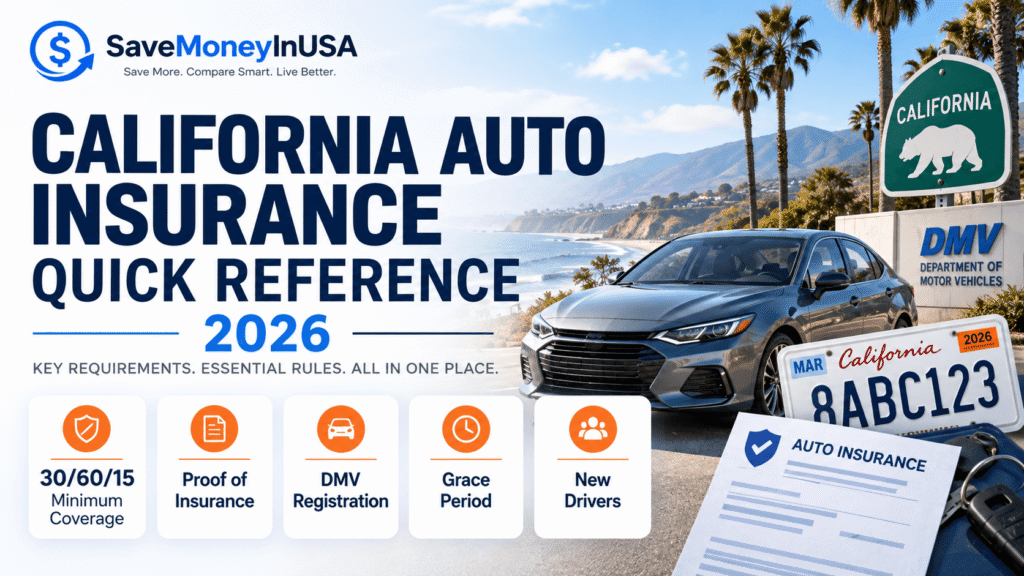
Use this California auto insurance quick reference to find the right guide, check what to do before driving, and distinguish DMV reporting deadlines from actual insurance coverage. For most standard policies, the minimum liability limits are 30/60/15. The detailed guides below explain each topic.
Find the California Insurance Guide You Need
| Your Question | Start Here |
|---|---|
| What coverage does California require? | California minimum car insurance requirements |
| How do the three liability limits work? | California 30/60/15 liability insurance explained |
| Can I register a car before DMV receives insurance? | Registration and insurance in California |
| What happens with a new car, missed payment, or cancellation? | California car insurance grace periods |
| I recently moved to California from another country. | California car insurance for new immigrants |
| I have a foreign license or am an international student. | Car insurance with a foreign license |
California Auto Insurance at a Glance
| Item | Quick Reference |
|---|---|
| Standard minimum liability | 30/60/15: $30,000 bodily injury per person, $60,000 per accident, and $15,000 property damage. See the minimum requirements guide above for exceptions and alternatives. |
| Before using a vehicle on public roads | Confirm active insurance or another accepted form of financial responsibility, including when parking on California public roads. |
| Proof of insurance | Keep evidence available for law enforcement, registration renewal, and a traffic collision. |
| Affordable coverage questions | Check the official California Low Cost Automobile Insurance Program for eligibility and its separate coverage rules. |
DMV Reporting Deadlines Are Not Insurance Coverage
A DMV record and an insurance policy answer different questions. A registration record that has not yet been suspended does not establish that a canceled policy is still active.
| DMV Timeline | What It Concerns |
|---|---|
| 30 days after a registration card is issued for a newly acquired private-use vehicle | The insurer’s deadline to report insurance information to DMV. |
| 45 days after cancellation of the previous policy | DMV says receiving replacement insurance information within this period prevents a notice from being sent. |
Neither timeline grants permission to drive uninsured. Check the new policy’s effective date and time before ending existing coverage. Follow any DMV notice by its stated suspension date.
Before You Drive: A Practical Checklist
- Verify coverage is active. A quote or application alone is not proof that a policy has started.
- Confirm the effective date and time. Ask the insurer about any gap when buying a car or switching policies.
- Check vehicle details. Compare the VIN on the policy, registration card, and vehicle.
- Keep proof accessible. Electronic reporting to DMV does not replace your need to provide evidence when requested.
- Review the coverage selected. Use the detailed minimum requirements guide to check limits, exceptions, and any lender requirements.
- Confirm special situations with the insurer. Ask about newly acquired vehicles, payment problems, cancellation, and foreign-license eligibility.
If You Receive a DMV Insurance Notice
Read the notice, check the VIN, and contact the insurer about reporting errors. Submit the requested evidence before the stated deadline. If registration is already suspended, follow DMV’s reinstatement instructions; having insurance alone may not complete reinstatement.
If the Vehicle Will Stay Off Public Roads
Check DMV’s Affidavit of Non-Use (ANU) and Planned Nonoperation (PNO) options before canceling coverage. The appropriate procedure depends on registration status and renewal timing. Keep the vehicle off public roads while the applicable restrictions are in effect.
Plan Your Next Step
Choose the guide above that matches your situation. If you are ready to request prices, use our car insurance quote comparison guide to prepare matching coverage details and questions for insurers or licensed agents. SaveMoneyInUSA provides educational information and does not issue personalized quotes or arrange coverage.
Official Sources
- California DMV — Auto Insurance Requirements
- California DMV — Affidavit of Non-Use and Insurance FAQs
- California DMV — Vehicle Registration Suspensions
- California Department of Insurance — Automobile Insurance Guide
- California Department of Insurance — Current Minimum Liability Limits
- California Low Cost Auto — Coverage
Insurance laws, DMV procedures, insurer practices, policy terms, program eligibility, and coverage options can change. Confirm current information with the California DMV, California Department of Insurance, your insurer, and the applicable policy documents before acting.
About the Author
The SaveMoneyInUSA Editorial Team researches car insurance costs, coverage options, state requirements, and quote comparison considerations for drivers in the United States.
Learn more about our Editorial Team.
Disclaimer
SaveMoneyInUSA is an independent informational website and is not an insurance company, broker, or agent.
Some links may be affiliate links. We may receive compensation from partners at no additional cost to users.
Insurance rates, coverage options, eligibility, requirements, policy terms, and DMV procedures vary by provider, state, and individual circumstances.
This content is provided for educational purposes only and should not be considered insurance, legal, or financial advice. Confirm current requirements with the appropriate agency and consult a licensed insurance professional about your situation.