

Last Updated: October 2026
Quick Answer
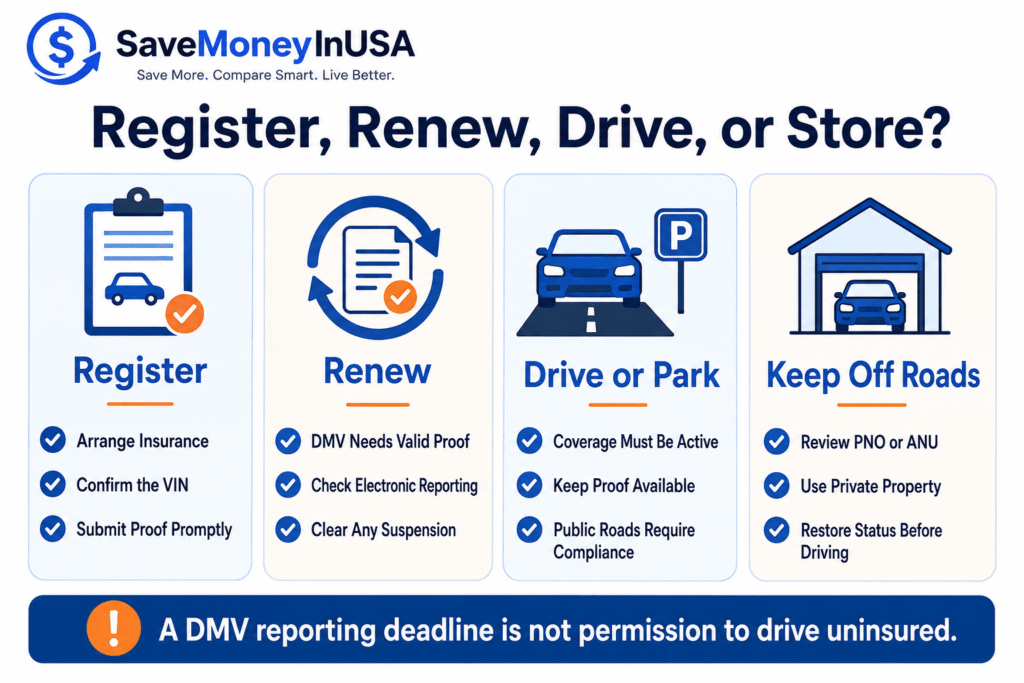
Usually, you should have insurance or another California DMV-accepted form of financial responsibility before registering a car for normal road use. However, California DMV may process some registration transactions before the insurance record reaches DMV. If DMV does not receive the required insurance information within 30 days after issuing a registration card, it is required to suspend the registration. This is a DMV reporting deadline, not permission to drive uninsured.
This does not mean you have 30 days to drive uninsured. A vehicle driven or parked on California roads must have the required financial responsibility in effect. Different rules apply when a vehicle is kept off public roads under Planned Nonoperation (PNO) or an Affidavit of Non-Use (ANU).
Use our guide to compare the same liability limits, deductibles, effective dates, and payment terms. Request quotes from licensed insurers or authorized providers, and confirm coverage is active before driving.
Can You Register a Car Without Insurance in California?
For normal road use, arrange a liability policy or another DMV-accepted form of financial responsibility before driving or parking the vehicle on California roads. California insurers generally report policy information to DMV electronically. See the DMV insurance requirements.
A registration card may be issued before DMV has the insurance information. DMV says it is required to suspend registration if it does not receive that information within 30 days of issuing the card. The 30 days concern proof reaching DMV; they do not postpone the requirement for financial responsibility when the vehicle is driven or parked on a California road. See DMV registration suspension rules.
The practical rule is therefore:
| Situation | Practical Answer |
|---|---|
| Registering a vehicle for normal road use | Arrange valid insurance or another accepted form of financial responsibility |
| Registration processed before insurance appears in DMV records | Check that DMV receives proof; it is required to suspend registration if information is not received within 30 days of issuing the card |
| Driving or parking on a public road | Required financial responsibility must be in effect |
| Vehicle will not be used on public roads | Review PNO or ANU requirements before canceling liability insurance |
California’s standard minimum liability limits are commonly described as 30/60/15 liability insurance. For a broader explanation of the state requirement, see our guide to California minimum car insurance requirements.
For a one-page overview of California liability limits, DMV insurance rules, registration, grace periods, and new-driver basics, see our California Auto Insurance Quick Reference 2026.
What Counts as Financial Responsibility in California?
Do you need insurance to register a car in California? For normal road use, you need a motor vehicle liability policy or another DMV-accepted form of financial responsibility. DMV lists a $75,000 cash deposit, a DMV-issued self-insurance certificate, and a $75,000 surety bond from a company licensed to do business in California as alternatives. Check the DMV list of accepted forms.
These alternatives are not a temporary exemption or an easy way to avoid insurance costs. Each has its own eligibility, documentation, and financial requirements. Most individual drivers meet the law through a California motor vehicle liability policy. Collision and comprehensive coverage alone do not satisfy the state’s financial-responsibility requirement.
Registering, Renewing, Owning, and Driving Are Different
Many confusing answers come from treating four separate actions as though they were identical.
| Action | What Matters |
|---|---|
| Owning a vehicle | Ownership alone is different from permission to drive or park it on a public road |
| Registering a vehicle | DMV needs required documents and insurance or financial-responsibility information |
| Renewing registration | DMV generally must have valid insurance information on file unless an applicable non-use status is used |
| Driving or parking on a public road | The vehicle must have active required financial responsibility and valid registration status |
A bill of sale, title application, temporary plate, DMV appointment, or pending insurance application does not by itself make an uninsured vehicle legal to drive. A quote is also not proof of insurance. Confirm that the policy is active and note its exact effective date and time before using the vehicle.
Can You Own a Car Without Insurance in California?
You may own a vehicle that is not covered by a standard active auto policy if it is not being used on public roads and you correctly handle its DMV status. Ownership alone does not give you permission to drive, store, or park the vehicle on a public road without meeting California requirements.
If the vehicle is registered and active, do not cancel liability insurance first and assume that parking it at home solves the problem. Depending on the timing, you may need to submit an Affidavit of Non-Use or file for Planned Nonoperation. The vehicle should be kept on private property and must remain off public roads while the applicable non-use status is in effect.
Do You Need Insurance to Renew Registration in California?
For a vehicle that will remain registered for normal road use, yes. DMV requires insurance or another accepted form of financial responsibility. Online renewal generally requires an insurer that reports coverage electronically to DMV; if proof is missing, follow the renewal notice or DMV instructions to submit it. See DMV renewal requirements.
Paying registration fees does not replace the insurance requirement. If the registration is already suspended because DMV lacks proof of insurance, you generally must clear the suspension before the vehicle can be legally operated. If you do not plan to use the vehicle during the next registration year, file PNO within the DMV filing window instead of completing a normal renewal and then canceling insurance.
What Happens If DMV Does Not Receive Proof of Insurance?
California’s Vehicle Registration Financial Responsibility Program can suspend a vehicle’s registration when:
- insurance information is not submitted within 30 days after a registration card is issued;
- DMV is notified that a policy was canceled and replacement coverage is not submitted within 45 days; or
- false evidence of insurance was used to obtain registration.
DMV sends a notice when your vehicle registration is subject to suspension. An active policy does not necessarily mean DMV has matched the insurance record to your vehicle. Read the suspension effective date on the notice and check your status through the DMV insurance suspension service.
Already Insured? Check Which Record Is Wrong
Compare the VIN on the vehicle itself with the VIN on your insurance documents, registration card, and DMV notice. Do not assume the insurer is responsible for every mismatch.
| What You Find | Next Action |
|---|---|
| Insurance documents show the wrong VIN | Ask your insurer to correct the documents and resubmit the insurance information to DMV. |
| Registration documents show the wrong VIN | DMV instructs owners to bring the ownership document and vehicle for VIN verification and correction. If registration is already suspended, contact DMV about a lawful way to present the vehicle; do not drive it there. |
| The vehicle, registration, and insurance VINs agree, but the DMV notice differs | Contact DMV about the notice discrepancy. Keep copies showing the matching records; do not change a correct policy VIN to match an incorrect notice. |
| The VIN matches, but DMV has no insurance record | Ask your insurer to confirm the California policy information and electronic reporting. Follow your notice and DMV’s official proof-submission instructions. |
DMV distinguishes between correcting insurance documents and correcting the vehicle registration record. See the VIN guidance in its Affidavit of Non-Use FAQ. Correcting a VIN is a separate task from clearing an insurance-related suspension.
Not Yet Suspended vs. Already Suspended
Before the suspension date: Submit the required evidence promptly. DMV must receive it before the effective date shown on your notice. Do not rely solely on an insurer’s statement that it sent the information.
Already suspended after a coverage lapse: Follow DMV’s reinstatement instructions. The standard process currently requires California proof of insurance and a $14 reinstatement fee.
Already suspended, but insured before the suspension took effect: DMV provides a separate option to request dismissal of the suspension action by mailing proof of liability insurance to the address below. Follow the official FAQ on proof predating the suspension. A request is not automatic approval, and this option does not guarantee a fee waiver or refund.
DMV
PO Box 997408, MS N305
Sacramento, CA 95899-7408
Submit Proof and Confirm the Result
For online submission, prepare your policy and NAIC numbers, license plate number, and the last five VIN characters or the PIN on your DMV notice. Your insurance card should identify California coverage. If you cannot complete the online submission, use the alternative channels on DMV’s official suspension page.
Keep your notice, coverage documents for the relevant dates, and submission confirmations together. Record when you contacted your insurer and what it confirmed. Recheck the DMV status after submitting proof and follow up through the official channels if the record remains unresolved.
Completion check: Confirm that DMV no longer shows the insurance-related suspension, that your required insurance is active, and that registration renewal or other requirements are also satisfied. Submitting proof, correcting a policy, or paying a fee alone does not confirm that the vehicle can be driven.
Do not operate or park the vehicle on California roads while registration remains suspended. A DMV appointment or insurance card does not override that restriction.
Compare coverage terms and the policy effective time before choosing a provider. If DMV says proof is missing, check the VIN and California policy details with your insurer.
PNO vs Affidavit of Non-Use
Planned Nonoperation and an Affidavit of Non-Use both apply to vehicles that will not be used on public roads, but they are not the same filing.
| Option | When It May Apply | Important Restriction |
|---|---|---|
| Planned Nonoperation (PNO) | When registration renewal is due and the vehicle will not be used for the entire registration year | The vehicle may not be driven, towed, stored, or parked on public roads or highways |
| Affidavit of Non-Use (ANU) | When a currently registered vehicle will no longer be operated or parked on public roads during the current registration period | File it before canceling liability insurance and keep the vehicle off public roads |
DMV currently accepts a PNO filing up to 60 days before registration expires or up to 90 days after expiration. Filing after the expiration date includes late penalties. If the vehicle is operated or parked where it may receive a citation, full registration fees and penalties may become due.
Neither PNO nor ANU is permission to make ordinary occasional trips. California DMV may issue a one-day Vehicle Moving Permit for certain limited purposes, such as moving the vehicle for repairs, inspection, or a change of storage location. Before regular public-road use, restore the proper registration status and arrange active financial responsibility.
Can You Get Insurance Without Registration?
In many cases, yes. You generally do not need to wait for permanent California plates or a completed registration card before arranging insurance. Insurers can often quote and start coverage using the VIN, ownership or purchase information, garaging address, driver details, and intended vehicle use.
Before buying or picking up the car, ask the seller or dealer for the VIN. Give the insurer accurate information and confirm:
- the vehicle and drivers shown on the policy;
- the coverage limits and deductibles;
- the exact effective date and time;
- whether the insurer will report the policy to California DMV; and
- whether a lender or leasing company must be listed.
If you are a new immigrant or have a foreign license, the insurer may request additional documents or driving-history information. See our guide to California car insurance for new immigrants and international drivers.
What If You Just Bought the Car?
Buying a vehicle and driving it are separate events. A dealer may handle title and registration paperwork, or a private seller may sign over ownership, but neither situation guarantees that your insurance is active.
If you already have an auto policy, it may temporarily extend certain coverage to a newly acquired vehicle. The deadline, eligibility, and coverage depend on the policy. California does not provide one universal new-car grace period that applies to everyone. Confirm coverage directly with the insurer before driving. Our California car insurance grace-period guide explains these policy and DMV timelines in more detail.
If you do not have an existing policy, arrange and bind coverage before taking the vehicle onto a public road. When comparing payment options, remember that no-down-payment car insurance usually means a low initial payment—not free insurance before coverage begins.
What If the Car Is Financed or Leased?
DMV financial-responsibility rules and lender requirements are separate. California law generally focuses on liability coverage, while a finance or lease agreement commonly requires collision and comprehensive coverage, specified deductibles, and the lender or leasing company listed on the policy.
Minimum liability alone may therefore be insufficient for a financed vehicle. Confirm the lender’s requirements before taking possession and review whether you need full coverage on a financed car.
A Safer Order for Insurance and Registration
- Get the VIN and accurate vehicle information.
- Confirm the drivers, garaging address, ownership, and lender information.
- Compare quotes using the same limits, deductibles, and effective date.
- Choose a policy and confirm that payment was accepted.
- Verify the exact date and time coverage becomes active.
- Save the insurance card or other accepted evidence of financial responsibility.
- Complete the appropriate registration, transfer, or renewal process.
- Check any DMV notice promptly and correct mismatched insurance information.
Use our step-by-step quote comparison guide to keep coverage terms consistent while comparing prices.
FAQ: California Registration and Insurance
Can I register a vehicle without insurance in California?
California generally requires proof of insurance or another accepted form of financial responsibility for registration. A transaction may sometimes be processed before the insurance record reaches DMV, but a new owner must submit proof promptly. Registration can be suspended if DMV does not receive the information within 30 days after issuing the registration card.
Can I own a car without insurance in California?
You may own a vehicle that is kept off public roads if its DMV status is handled correctly, such as through an applicable PNO or ANU filing. You may not use ownership as permission to drive or park an uninsured vehicle on a California public road.
Do I need insurance to renew California registration?
Yes, for a vehicle that will remain active for normal road use. DMV generally must have valid insurance information, often reported electronically by the insurer. If the vehicle will not be used for the registration year, review PNO instead of normal renewal.
Can I insure a car before it is registered?
Usually, yes. Insurers can often start a policy using the VIN, purchase or ownership information, address, driver details, and vehicle use before permanent plates or a completed registration card are available.
What happens if I register a car but DMV does not receive my insurance?
California DMV can suspend the vehicle registration if the required insurance information is not received. DMV says it must receive the required insurance information within 30 days of issuing a registration card or suspend the registration. This reporting period is not permission to drive or park the vehicle on a public road without required financial responsibility.
Can I drive to the DMV without insurance?
Do not assume that a short trip or DMV appointment makes uninsured driving legal. Arrange active insurance or another accepted form of financial responsibility before driving the vehicle on a public road.
What happens if my registration is suspended for no insurance?
Do not operate or park the vehicle on California roads while registration is suspended. Standard reinstatement currently requires proof of insurance and a $14 fee. If you can prove that the vehicle was insured before the suspension became effective, DMV provides a separate process to request dismissal. See “Not Yet Suspended vs. Already Suspended” above and follow the current DMV instructions. A request does not guarantee approval or a fee refund.
Final Answer
California drivers should not plan to register, renew, drive, or park a vehicle on public roads without required financial responsibility. Although a registration transaction may sometimes be processed before DMV receives the insurance record, that does not create permission to drive uninsured. A new registration can be suspended when proof is not received within 30 days.
If the vehicle will not be used, handle PNO or ANU before canceling liability insurance. If it will be driven, arrange coverage first, confirm the exact effective time, and make sure DMV receives the correct policy and VIN information.
Our guide explains what to compare; request actual quotes from licensed insurers or authorized providers. Confirm the final price, coverage, effective date, and insurer details before choosing.
Sources
- California DMV — Auto Insurance Requirements
- California DMV — Suspended Vehicle Registration
- California DMV — Vehicle Registration Renewal
- California DMV — Planned Nonoperation
- California DMV — Affidavit of Non-Use
- California Department of Insurance — Current Minimum Auto Insurance Limits
DMV procedures, fees, insurance requirements, and filing periods may change. Confirm the current rules with the California DMV, California Department of Insurance, and your insurer before acting.
About the Author
The SaveMoneyInUSA Editorial Team researches car insurance costs, coverage options, state requirements, and quote comparison considerations for drivers in the United States.
Learn more about our Editorial Team.
Disclaimer
SaveMoneyInUSA is an independent informational website and is not an insurance company, broker, or agent.
Some links may be affiliate links. We may receive compensation from partners at no additional cost to users.
Insurance rates, coverage options, eligibility, requirements, policy terms, and DMV procedures vary by provider, state, and individual circumstances.
This content is provided for educational purposes only and should not be considered insurance, legal, or financial advice. Confirm current requirements with the appropriate agency and consult a licensed insurance professional about your situation.